
Romania
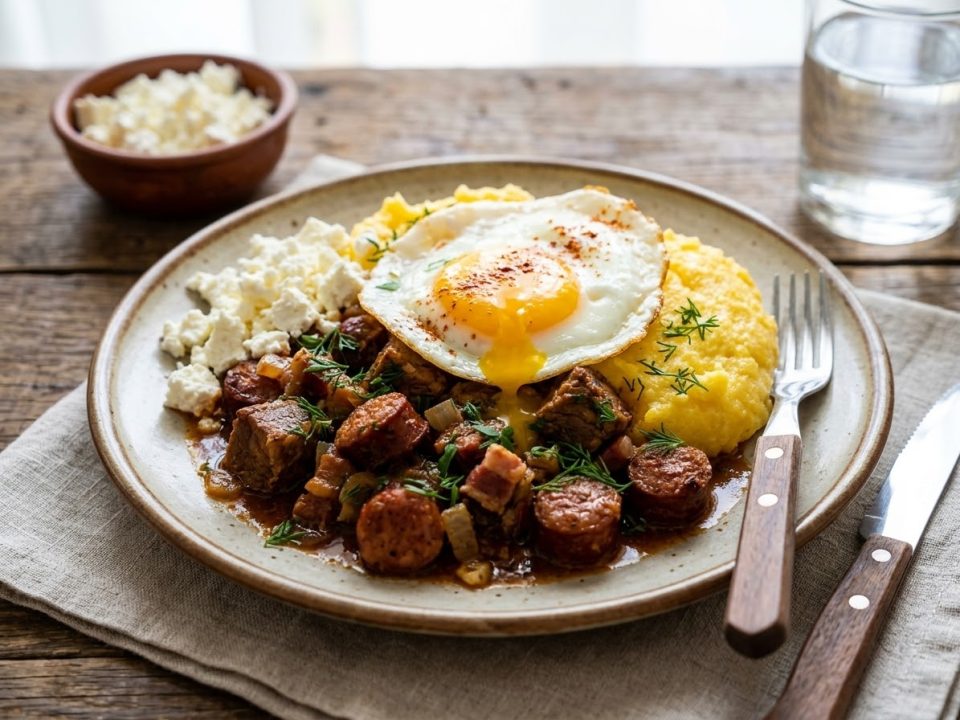
Romanian Pork Stew (Tochitura)
Shared by Georgiana Ciornei
Prep15-20 minutes
Cook45-55 minutes
Serves4
DietaryPork, Egg, Milk/Dairy, Sulphites (Soya, Gluten, Mustard, Celery - can be found in store-brought smoked sausages and bacon)
Method
- Cook the bacon: Fry bacon pieces in a large pan over medium heat until crispy. Remove and set aside, reserving the fat.
- Brown the pork: Add cubed pork to the pan with the bacon fat and sear until browned on all sides.
- Add onions and spices: Stir in diced onion, paprika, smoked paprika, salt, and pepper. Cook until onions soften.
- Simmer the stew: Pour in water, add sliced sausages, minced garlic, tomato paste, and bay leaves. Cover and simmer for 35–40 minutes until pork is tender and the sauce thickens. Stir occasionally.
- Add wine: Pour in red wine during cooking to enhance flavor and allow alcohol to evaporate.
- Prepare polenta: Cook polenta according to package directions while the stew simmers.
- Fry eggs: In a separate pan, fry eggs sunny-side up.
Serving
- Place a portion of polenta on each plate.
- Spoon the stew over the polenta.
- Top with a fried egg and sprinkle grated cheese.
- Garnish with crispy bacon pieces and fresh dill or parsley.
- Serve hot, optionally with pickled vegetables on the side.
Tips for Authentic Flavour
- Use lard or sunflower oil instead of olive oil for traditional taste.
- Include a mix of pork cuts for varied texture and richness.
- Simmer the meat until very tender for the best consistency.
- Adjust spices to taste; some recipes include caraway, thyme, or extra paprika.
The story behind the dish
Tochitura is one of Romania's most beloved and iconic comfort foods, deeply rooted in rural tradition. Historically, it stems from Ignat (the tradition held around St. Ignatius' Day in December), where various cuts of fresh port, sausages, and smoked bacon were simmered together in lard or fat.
Traditionally served alongside mamaliga (yellow cornmeal polenta), grated sheep's cheese (branza de burduf), and crowned with a fried egg, this hearty dish was designed to fuel farm workers through the cold winter months and remains a staple of Romanian hospitality and celebration today.