
Crispy Tempura Prawns (Ebi Tempura)
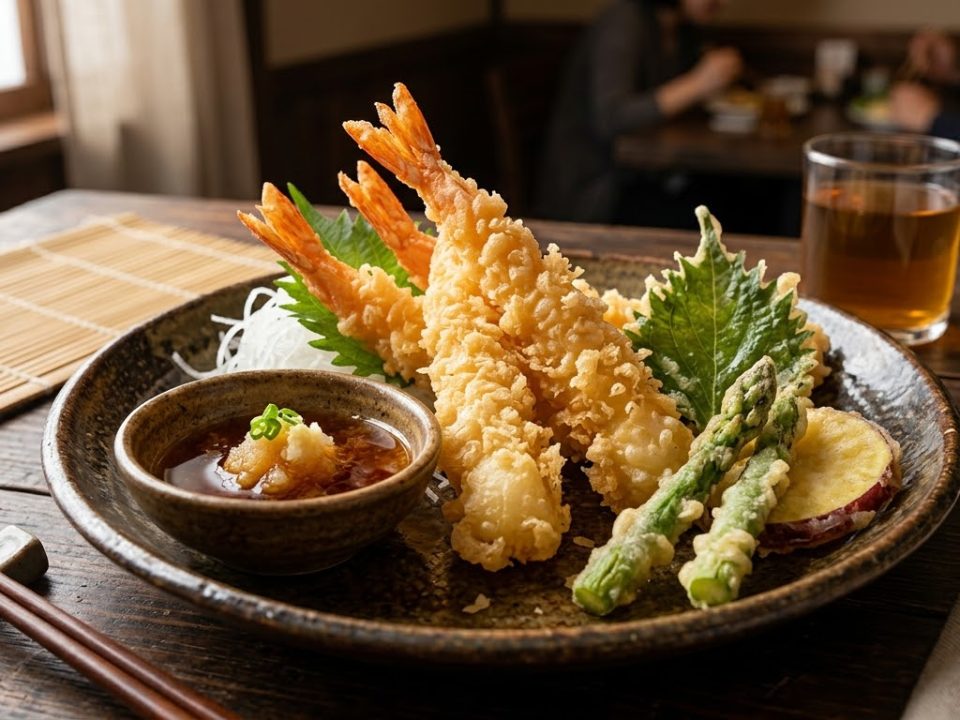
Method
Instructions
- Prep the Prawns
To keep the prawns straight while frying, make 3-4 small diagonal cuts along the underside of each prawn. Gently snap the prawn back to straighten the sinew, then pat dry with paper towels. Dust lightly with plain flour.
- Make the Batter (At the Last Minute)
Whisk the egg yolk and ice-cold soda water together in a bowl. Add the flour (and cornflour, if using). Gently fold with chopsticks or a fork just until combine. Do not overmix – a few lumps are desirable, as overworking creates glute and makes the batter chewy instead of crispy.
- Heat the Oil
Heat the oil in a deep saucepan or wok to 170oC – 180oC. (Test by dropping a bead of batter into the oil; it should sink slightly and immediately sizzle back to the top).
- Fry in Batches
Dip each dusted prawn into the ice-cold batter holding it by the tail, then carefully lower it into the hot oil. Fry 3-4 prawns at a time for 2-3 minutes until pale golden and crisp.
- Drain and Serve
Remove with a slotted spoon and drain on paper towels or a wire rack. Serve immediately while hot with tempura dipping sauce (tsuyu) or a pinch pf sea salt and lemon wedges.
The story behind the dish
A Brief History of Tempura
Portuguese Roots in the 16th Century
Although closely associated with Japanese cuisine, tempura originated from Portuguese missionaries and traders who arrived at the port city of Nagasaki in the mid-16th century. During Lent and Ember Days, Catholic doctrine prohibited eating meat, so the Portuguese prepared battered and deep-fried green beans known as peixinhos da horta (“little fish of the garden”).
The Origins of the Name
The word tempura comes from the Latin tempora (from ad tempora cuaresma), meaning “in the time of Lent” or “the ember days,” referring to these official fasting periods.
Japanese Adaptions and The Edo Period
Japanese cooks embraced the technique, refining the batter to be much lighter, airier, and crispier. By the Edo period (1603-1867) tempura became a popular street food sold from food carts (yatai) using fresh seafood from Tokyo Bay. It gained high-profile fans, notably Tokugawa leyasu – the first Edo shogun – who was famously fond of it.