
Bread and Butter Pudding
Method
Instructions
- Prep the Dish and Bread
Butter a 1.5-lite baking dish. Butter each slice of bread generously on one side, then cut the slices diagonally into triangles.
- Layer the Base
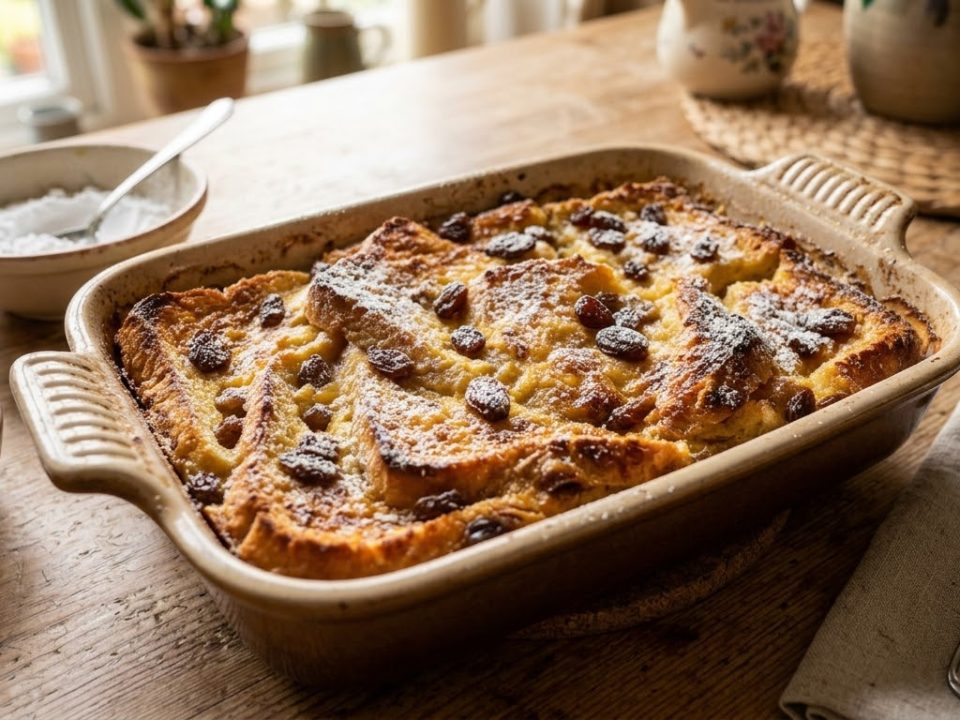
Arrange a layer of buttered bread in the bottom of the dish, butter-side up. Sprinkle over half of the dried fruit and half of the ground spice. Repeat with the remaining bread, fruit, and spice to create an overlapping top layer.
- Make the Custard
In a bowl, whisk together the milk, double cream, eggs, 50g caster sugar, and vanilla extract until smooth.
- Soak the Bread
Pour the custard mixture evenly over the layered bread. Press the top layer down gently with a fork to help it absorb the liquid. Let it sit for 30 minutes – this soaking step ensures the bread fully absorbs the custard without drying out during baking.
- Bake
Preheat your oven to 180OC (160oC fan / Gas Mark 4). Sprinkle the remaining tablespoon of caster sugar over the top layer for a crunchy crust. Bake for 35-40 minutes until top is golden-brown and the custard is set with a gentle wobble in the middle.
- Serve
Allow to cool for 5 minutes before serving warm with custard, double cream, or a scoop of vanilla ice cream.
The story behind the dish
A Brief History of Bread and Butter Pudding
Origins in the 11th Century: The “Poor Man’s Pudding”
The origins of bread-based puddings trace back to the 11th-century England. Thrift and resourcefulness were essential in early medieval kitchens, and throwing away stale bread was wasteful. Cooks realised that soaking stale bread in hot water, milk or broth made it edible again. Known as “poor man’s pudding,” these early versions were simple savoury or lightly sweetened pottages designed to stretch ingredients as far as possible.
Evolution in the 17th Century: Whitepots
By the 17th century, bread puddings evolved into richer, baked creations. A popular predecessor was the Devonshire Whitepot, which combined sliced bread or leftover pastry with milk or cream, eggs, suet or butter, spices, and dried fruits like raisins and dates. Some early iterations used sliced beef bone marrow in place of butter to enrich the custard.
The 18th Century: The First Official Recipes
The classic Bread and Butter Pudding recognised today emerged in the early 18th century as butter, milk, and refined sugar (as it had become more accessible).
• 1728: One of the earliest recorded recipes appeared in Eliza Smith’s famous cookbook, The Compleat Housewife. She instructed cooks to layer buttered bread with currents, raisins, and nutmeg, then drown it in a rich custard made of cream, egg yolks, and sugar before baking.
• 1747: Hannah Glasse included variations in The Art of Cookery Made Plain and Easy, solidifying it as a staple dish in English homes.