
Le matété de crabe (also called matoutou de crabe)
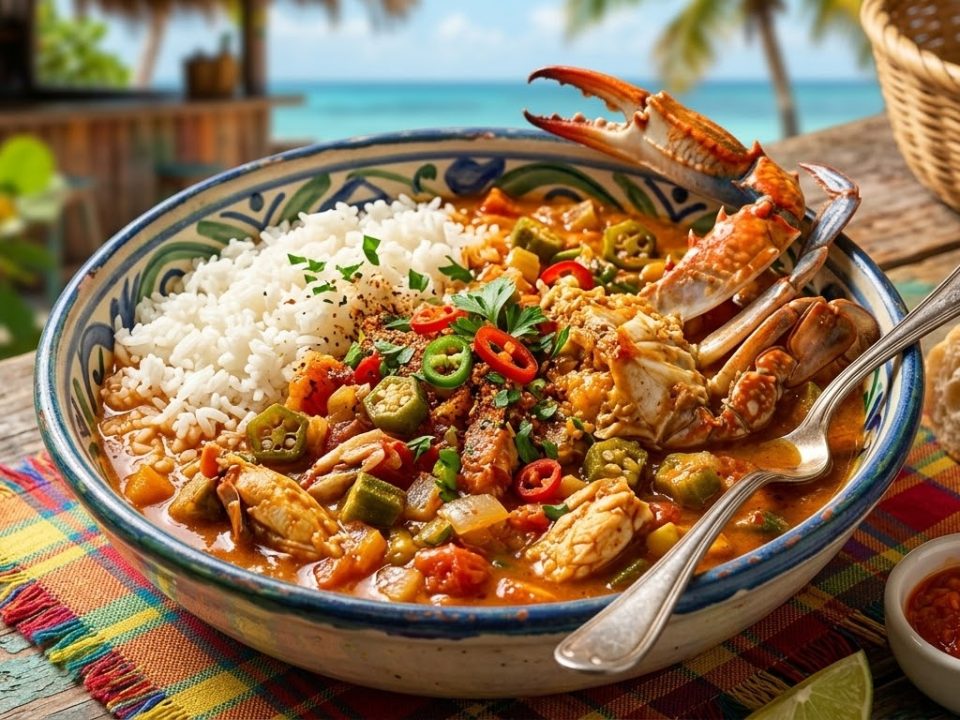
Method
Preparation
- After cleaning the crabs thoroughly, lightly crush the claws. Season with the juice of one lime, one vegetal (sweet) chili pepper, salt and pepper. Leave to marinate overnight in the fridge, ideally (4 hours minimum).
- Finely chop the seasonings (onion, garlic, chives, parsley). Dice the tomatoes.
- In a large casserole pot, heat a drizzle of oil. Lightly sweat the chopped seasonings, thyme, cloves, allspice leaf and bacon lardons.
- Add the crabs and brown, stirring, until they turn red. Add the tomatoes, Colombo powder (and the fat), cover and cook for 5 minutes.
- Add the rice, stir, pour in enough water to just cover, and add one chili pepper for the cooking.
- Cover and cook for 20 to 25 minutes, stirring 2 to 3 times during cooking.
- Adjust the seasoning at the end of cooking, drizzle with lime juice and sprinkle with chopped parsley.
The story behind the dish
Once considered “slave food,” crab has become a proud symbol of Creole cuisine in Martinique. Long before colonization, the island’s first peoples—the Arawaks and the Caribs—were already preparing crab in a spicy sauce called taumali, made from chili and cassava juice.
During colonial times, crab was too exotic for Europeans and was mainly consumed by enslaved people, especially during Lent. On Easter Sunday, they would gather to share their remaining crabs in a moment of community and resilience.
After emancipation, newly freed families briefly replaced crab with meats like rooster or lamb. But soon, crab regained its place of honour, especially on Easter Monday, when families now gather to enjoy matété —a flavourful dish made of land crab stewed with rice, local spices, and aromatic herbs.
Today, matété is a living tradition, passed down through generations. It’s a festive moment shared by the sea or riverside as we traditionally celebrate Easter at the beach.